Rule34 Explained: Stream Online in Full HD for Free
Rule34 is one of the internet's most recognizable and controversial memes. What started as a humorous observation about online creativity has evolved into a widespread phenomenon involving fan art, anime communities, imageboards, and dedicated websites. But what does Rule34 actually mean, where did it come from, and is it safe to explore?
Whether you've encountered the term on Reddit, X (formerly Twitter), Discord, or an anime discussion forum, understanding Rule34 can help you make sense of an unusual corner of internet culture.
This guide explains the history of Rule34, how related websites operate, the connection to anime and manga, important online safety considerations, and alternatives for anyone interested in digital art communities.
What Is Rule34? Understanding the Internet Meme
Rule34, also written as Rule 34 or R34, is an unofficial internet saying that claims adult-oriented content exists about virtually any imaginable subject. It is best understood as a humorous exaggeration about the creativity, unpredictability, and sometimes provocative nature of online communities.
The traditional wording is:
"There is porn of it. No exceptions."
The statement isn't a scientific fact, regulation, or official internet policy. Instead, it reflects the tendency of internet users to create unexpected interpretations of popular characters, fictional universes, cultural references, and everyday objects.
Is Rule34 a Website or an Internet Rule?
Interestingly, it's both, although the two meanings shouldn't be confused. Originally, Rule34 referred exclusively to an internet meme. Over time, websites adopted the name to describe searchable collections of adult-oriented illustrations and fan-created media.
Today, people searching for "rule34 online" might be interested in the original meaning, fan art communities, specialized imageboards, account registration, or online safety. The same search term can therefore represent several different intentions.
The distinction matters because the meme itself is simply an idea, while websites using the name are independently operated platforms with different policies and features.
Why Is It Called Rule 34?
The number comes from the informal Rules of the Internet, a collection of humorous statements that circulated through early online communities.
These so-called rules were never official standards. They developed through message boards, internet jokes, and collaborative online culture.
Rule34 became particularly memorable because it presented a strange observation about internet content as if it were a universal law.
The History of Rule34: Where Did It Come From?
Rule34's origins trace back to the early 2000s, when internet forums, webcomics, and imageboards played an important role in shaping modern meme culture.
The Original Rule34 Comic
The phrase is widely attributed to a 2003 webcomic created by British artist Peter Morley-Souter, also known as TangoStari.
The comic reacted to the unexpected existence of adult-themed artwork featuring characters from the popular newspaper comic Calvin and Hobbes.
Its punchline introduced the idea that if something exists, someone on the internet has probably created adult content about it.
The comic spread through online communities and helped establish Rule34 as a recognizable expression. Although historical accounts differ on some details of its early circulation, the webcomic is widely regarded as an important starting point.
How 4chan Helped Popularize Rule34
4chan played a significant role in popularizing Rule34 and other early internet sayings. During the mid-2000s, anonymous imageboards became meeting places for internet humor, experimental artwork, and discussions about popular culture.
Rule34 fit naturally into that environment because it encouraged users to share surprising examples of fan creativity.
The phrase gained visibility after the original webcomic circulated in the early 2000s. It subsequently appeared in online slang dictionaries and collections of internet rules. By the late 2000s, dedicated image archives, including Paheal, had helped organize related content, while imageboard communities continued spreading the expression.
During the 2010s, social networks, anime fandoms, and searchable art platforms introduced Rule34 to wider audiences. These developments transformed a short joke into a lasting internet reference.
What Is the Connection Between Rule34 and Rule35?
Rule35 is another unofficial internet saying closely associated with Rule34. Its general meaning is that if adult-oriented artwork about a particular subject doesn't already exist, someone will eventually create it.
Together, the two sayings emphasize the internet's seemingly limitless capacity for unusual creative interpretations. Neither is a genuine rule that users must follow.
How Do Rule34 Websites Work?
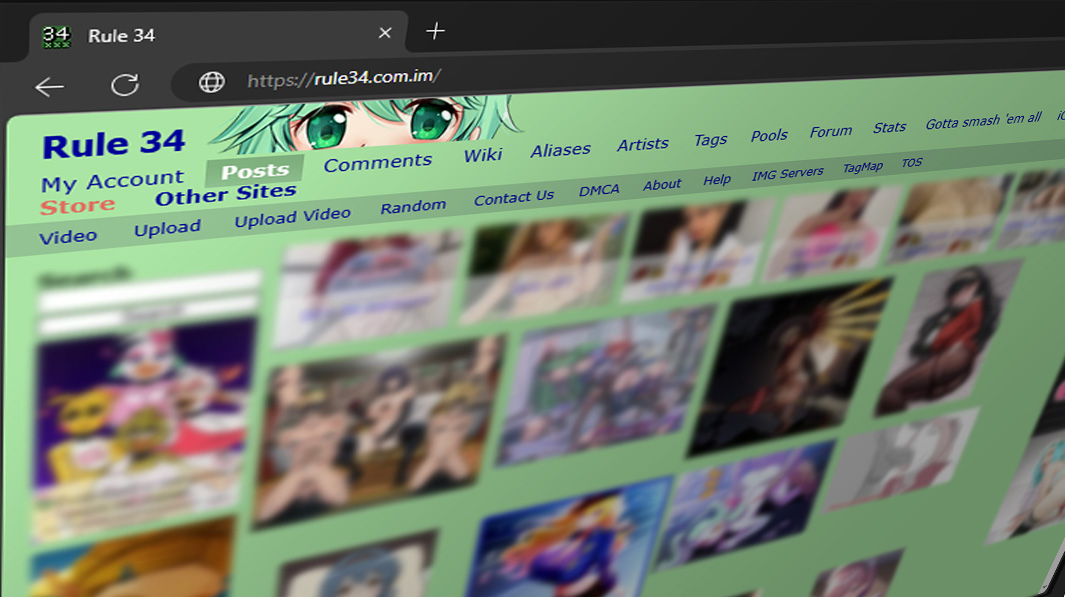
Rule34 websites generally function as specialized imageboards or searchable media archives. Instead of organizing content exclusively through traditional categories, many use user-generated tags, allowing visitors to locate material associated with particular characters, artists, franchises, or themes.
The underlying technology is similar to systems used by other booru-style image platforms.
Understanding Rule34 Booru Platforms
A booru is a type of image-sharing website that relies heavily on tags to classify and retrieve visual content. Rather than browsing hundreds of unrelated images, users can combine descriptive keywords to narrow their results.
Tags may identify characters, fictional universes, anime franchises, manga titles, artists, image formats, media types, and content ratings. Some communities also maintain detailed metadata and descriptions to improve search accuracy.
However, not every booru offers identical filtering, moderation, or privacy protections. Tag accuracy also depends on the people maintaining the archive.
How to Use Rule34 Search Features
For adults who choose to visit a Rule34-style archive, understanding the search interface can make the experience more predictable.
Start by verifying the website address and reviewing its content policies. A trustworthy-looking domain name alone does not guarantee that a platform is secure or appropriately moderated.
Once on the website, the search function generally allows visitors to enter descriptive tags representing artists, fictional characters, franchises, or media categories. Some platforms accept multiple tags separated by spaces to narrow the displayed results.
Before viewing content, check whether the platform provides content ratings, exclusions, or blacklist settings. These tools may help personalize browsing, although they cannot guarantee that every image has been categorized correctly.
Ordinary image viewing should not require installing unrelated browser extensions, downloading executable files, or granting unnecessary device permissions.
Does Rule34 Require Registration?
Not necessarily. Some Rule34-style websites allow visitors to browse publicly accessible pages without creating an account.
Registration may be required for saving favorite posts, adding comments, managing personal preferences, uploading artwork, or contributing tags.
Requirements vary by website and can change. Before registering, review the platform's privacy policy and avoid reusing passwords from important accounts.
Why Is Rule34 So Popular in Anime and Manga Communities?
Anime and manga fandoms have become strongly associated with Rule34 because their audiences already have long traditions of producing fan illustrations, alternative character designs, and independently created stories.
The connection is cultural rather than technical. Japanese animation and comics frequently feature memorable visual styles, detailed fictional worlds, and characters that attract international fan communities.
The Influence of Anime Fan Art
Fan art lets people reinterpret familiar characters and settings beyond their original stories. Artists frequently imagine alternative costumes, crossover scenarios, redesigned characters, humorous situations, and entirely different fictional universes.
These interpretations can range from simple sketches to elaborate digital paintings and independently produced comics.
Some adult-oriented fan communities take these reinterpretations further, contributing to Rule34's association with anime.
However, anime fan art and Rule34 are not interchangeable terms. Most fan-created anime illustrations are not inherently sexual, and many online art communities focus on general creativity rather than adult material.
Rule34 and Doujinshi: Are They the Same?
Not exactly. Doujinshi generally refers to independently published Japanese works, frequently including fan-created manga, comics, or other publications.
Some doujinshi contain mature themes, while many are entirely non-explicit.
Rule34, by contrast, specifically refers to the idea of adult-oriented reinterpretations of existing subjects. Both concepts can overlap, but they describe different things.
Is Rule34 Safe? Important Browser Security Considerations
Rule34 is a meme, so the phrase itself poses no technical danger. The safety concerns arise when visiting websites that use the name, particularly those displaying user-uploaded adult content.
A Rule34 website is not automatically infected with malware, but no unfamiliar website should be assumed safe solely because it is popular.
Potential risks include misleading advertising, malicious redirects, phishing attempts, inappropriate content exposure, and unverified downloads.
Does Rule34 Have Viruses?
There is no universal answer because Rule34 refers to multiple websites and services. A website might display ordinary content while also featuring third-party advertisements or links that lead elsewhere.
Unexpected installation requests, fake virus warnings, suspicious pop-up windows, unrelated redirects, and misleading download buttons should all be treated cautiously.
Requests for passwords, payment information, or sensitive personal details from unfamiliar domains are additional warning signs.
Modern browsers offer built-in protection against some deceptive websites and dangerous downloads, although these safeguards cannot guarantee complete security.
Is Rule34 Safe on Mobile Devices?
Mobile browsing introduces additional considerations, particularly because smaller screens can make misleading buttons and advertising links harder to identify.
Keeping the phone's operating system and browser updated provides an important foundation for safer browsing. Users should also avoid installing applications from unknown sources, reject unnecessary notification permissions, and exercise caution with downloaded files.
Built-in browser security protections can help detect certain threats. However, no security feature can compensate for granting excessive permissions to an unfamiliar application.
Remember that private browsing can reduce locally stored browsing history, but it doesn't make your activity anonymous to websites, network administrators, or internet providers.
Does Rule34 Have Age Restrictions?
Rule34-related websites commonly contain material intended exclusively for adults. Users should respect each platform's stated age requirements and the content restrictions that apply in their location.
Age verification procedures vary across websites and regions. An age-warning screen is not a guarantee that every uploaded image has been properly reviewed.
Parents and guardians looking for anime artwork suitable for younger audiences should prioritize moderated, age-appropriate communities rather than adult-oriented archives.
Illustrative expert perspective — Dr. Eleanor Brooks, fictional digital media researcher: "The key to understanding Rule34 is separating the cultural meme from the actual platforms. A joke can be harmless to discuss, while the websites associated with it may require additional safety precautions."
Rule34 vs. Booru: What Are the Main Differences?
One common misunderstanding is assuming that all booru-style platforms are Rule34 websites.
In reality, booru describes a method of organizing image collections, while Rule34 identifies a particular internet concept and the mature-content archives associated with it.
| Feature | Rule34-Style Archives | General Booru Platforms |
|---|---|---|
| Main focus | Adult-oriented fan content | Images organized by community interests |
| Content type | Predominantly mature media | Safe, mixed, or mature depending on the website |
| Search method | Tag-based searching | Tag-based searching |
| Account requirements | Platform dependent | Platform dependent |
| Filtering | Varies by platform | Varies, sometimes with detailed controls |
| Moderation | Site-specific policies | Site-specific policies |
| Audience | Adults where explicit material is hosted | Depends on the platform and its content policies |
The most significant difference is the intended audience and content policy, not necessarily the underlying technology.
What Are the Best Rule34 Alternatives?
The right alternative depends on whether you're interested in anime illustrations, fan-made artwork, sophisticated search tags, or mature-content communities.
For people primarily interested in visual creativity, several established art platforms provide different ways to browse and discover illustrations.
Pixiv: Anime and Manga Illustrations
Pixiv is a major online community for original illustrations, anime artwork, and manga-inspired creativity. It is particularly popular among Japanese artists and international anime enthusiasts.
The platform supports artwork discovery through tags, artist profiles, and community interactions. Some content may be mature, making its content ratings and display settings important considerations.
Pixiv is especially relevant for readers who want to understand the broader artistic culture surrounding anime fan illustrations without relying exclusively on Rule34-focused archives.
DeviantArt: General Fan Art and Digital Creativity
DeviantArt brings together artists working across digital illustration, traditional drawing, photography, fantasy art, and character design.
Its broad creative focus makes it useful for people interested in original characters, fan-made interpretations, visual tutorials, and artistic communities.
Content visibility and mature-content settings can influence browsing experiences, so users should review the options available to their accounts.
ArtStation: Professional Artwork and Character Design
ArtStation primarily serves artists involved in games, animation, entertainment design, and professional digital illustration.
Visitors can explore polished character concepts, environment paintings, fantasy illustrations, and detailed portfolios.
It is a particularly useful option for people who appreciate fictional character artwork but prefer a stronger emphasis on professional creative presentation.
Danbooru and Safebooru: Detailed Tag-Based Searching
Danbooru is an anime-focused imageboard known for its extensive tagging system. Images can be categorized through character names, artists, franchises, visual attributes, and other descriptive information.
Its broader archive contains mature material, while the Safebooru domain is intended for non-explicit browsing.
Safebooru is therefore more suitable for visitors interested in anime image organization without deliberately seeking adult content, although community moderation and image classification should not be treated as infallible.
Illustrative expert perspective — Marcus Bennett, fictional online community design consultant: "A good tagging system does more than organize images. It helps users find relevant content, understand its context, and avoid categories they don't want to encounter."
Is There an Official Rule34 Website or Mobile App?
Because Rule34 originated as an internet meme rather than a company or formal organization, there is no single official authority governing every website that uses the name.
One widely known dedicated website is Rule34.xxx, but its existence doesn't make it the official owner of the underlying meme.
Other websites operate independently and may use similar names, interfaces, or content-management systems.
What Is the Rule34 App?
People searching for a Rule34 app may encounter third-party Android applications, mobile web interfaces, or unofficial viewing tools.
An app using the Rule34 name shouldn't automatically be considered authorized or trustworthy.
Before downloading an unfamiliar application, investigate its publisher, distribution channel, privacy policy, requested permissions, and update history. Claims of affiliation with a particular website should also be verified rather than accepted at face value.
For many users, visiting a website through an updated browser is preferable to installing an unfamiliar application.
Is Rule34 Free to Use?
Many Rule34-style imageboards allow free access to publicly available content. However, free browsing doesn't necessarily mean every feature is available without registration, or that every associated website is completely free of charges.
Some websites may include advertising, optional account functionality, or references to unrelated paid services.
Unexpected payment requests, misleading subscription offers, and unfamiliar premium services should be approached cautiously.
What Does Rule34 Mean on Social Media?
On platforms such as X, Reddit, Discord, and other online communities, Rule34 frequently appears as a joke, reaction, or reference to fan-generated adult content.
Someone might mention Rule34 when discussing an unexpectedly popular fictional character or the internet's tendency to transform almost any subject into a meme.
Importantly, mentioning Rule34 doesn't necessarily mean someone is sharing explicit material. Often, the phrase serves as shorthand for the idea that virtually nothing remains untouched by internet parody.
Why Is Rule34 Mentioned on Twitter or X?
Rule34 references can appear in discussions about trending video games, animated shows, character designs, and newly introduced fictional mascots.
Online users sometimes joke that a newly popular character will inevitably inspire mature fan illustrations.
The expression works because many internet users already recognize its cultural meaning, even if they've never visited a dedicated Rule34 website.
How Has Rule34 Influenced Modern Meme Culture?
Rule34 illustrates how participatory online communities transform familiar entertainment into unexpected creative material.
A short phrase can become a shared cultural reference, while fan communities continuously reinterpret established characters and fictional worlds.
Its popularity also reflects broader remix culture, where digital audiences create derivative illustrations, jokes, commentary, and alternative interpretations of existing media.
Different communities draw different boundaries around mature material. Those cultural differences help explain why Rule34 can appear as an ordinary meme in one discussion and a controversial subject in another.
Rule34, Copyright, and Ethical Considerations
The existence of fan-generated artwork raises questions about intellectual property, artistic credit, platform responsibility, and consent.
Not every image posted on a Rule34 archive is necessarily uploaded by its original creator. This makes attribution and respect for artists especially important.
Does Fan Art Automatically Receive Copyright Protection Exceptions?
No. Copyright treatment depends on the jurisdiction, nature of the original material, creative transformation involved, and other relevant circumstances.
Some fan-created works may fall within recognized copyright exceptions, while others may conflict with the rights of original creators or publishers.
The fact that an image is publicly visible or labeled as fan art doesn't automatically mean it can be downloaded, republished, modified, or sold without restrictions.
Anyone intending to reuse artwork should review the creator's permissions and applicable copyright rules before proceeding.
Why Do Artist Credits Matter?
Attribution helps viewers identify original creators and understand where artwork originated.
Respectful participation in online art communities includes checking original artist profiles, following publishing preferences, avoiding unauthorized commercial reuse, and reporting impersonation or stolen artwork where appropriate.
Privacy and consent deserve particular attention when images depict identifiable real people.
These principles apply across online art communities, not just Rule34 websites.
Illustrative expert perspective — Sophia Mitchell, fictional digital copyright educator: "Online visibility doesn't equal permission. Giving proper credit and respecting artists' publishing preferences are essential parts of participating in digital art communities responsibly."
How Can You Browse Fan Art Communities More Safely?
You don't need advanced technical knowledge to develop better browsing habits. A few straightforward precautions can significantly reduce common risks across imageboards, social networks, and digital art platforms.
Understanding Website Trust and Content Filters
Website trust begins with checking the address carefully and confirming that you're visiting the intended platform. Imitation domains sometimes use similar spelling or familiar branding to mislead visitors.
An updated browser with anti-phishing and download protections can help detect certain security threats. It's also sensible to limit the personal information shared with unfamiliar websites and avoid downloading unnecessary software.
Content settings deserve equally careful attention. Rating filters and blacklists may reduce exposure to unwanted images, but their reliability depends on how accurately the platform categorizes uploaded material.
Some Rule34-style archives acknowledge that filtering features may occasionally display content outside the selected categories.
For stronger content avoidance, choosing a platform designed for non-explicit artwork is generally safer than depending entirely on filters within an adult-oriented archive.
Why Browser Permissions Matter
Websites sometimes request permission to display notifications, access device features, or interact with downloaded files.
These requests should be evaluated according to the website's actual purpose. An ordinary image gallery typically doesn't need extensive device permissions simply to display artwork.
If a page unexpectedly requests software installation, presents alarming security messages, or redirects to an unfamiliar domain, leaving the website is usually the safer choice.
Maintaining updated devices and avoiding suspicious downloads helps reduce exposure to common online threats.
Conclusion: Understanding Rule34 in Today's Internet Culture
Rule34 has evolved from a simple early-internet joke into a widely recognized expression associated with fan art, anime, imageboards, and digital communities.
Understanding Rule34 means recognizing the difference between the original meme, the websites that adopted its name, and the broader creative culture surrounding fan-generated content.
Its history offers an interesting glimpse into how online jokes become lasting cultural references, while its modern websites highlight the importance of responsible browsing, accurate content labeling, and respect for artists.
Whether you're researching internet slang, comparing booru platforms, or exploring alternative art communities, start with trustworthy information, pay attention to website safety, and choose platforms that match your interests and comfort level.
Frequently Asked Questions About Rule34
What Does Rule34 Mean in Simple Terms?
Rule34 is an unofficial internet meme suggesting that adult-oriented content exists about almost anything imaginable. It originated in early online culture and is commonly referenced in discussions about fan art, anime, fictional characters, and internet humor.
When Was Rule34 Created?
Rule34 is commonly traced to a 2003 webcomic by Peter Morley-Souter, known online as TangoStari. The phrase spread through forums and imageboards during the mid-2000s before becoming a widely recognized internet meme.
Is Rule34 Safe to Visit?
Safety depends on the specific website, its advertising, download links, privacy practices, and content moderation. Adult-oriented archives may expose visitors to explicit material, so users should verify domains, maintain browser protections, and avoid suspicious downloads.
Does Rule34 Require an Account?
Some Rule34 websites allow visitors to browse publicly available material without registration. Accounts may be required for saving favorites, commenting, uploading media, or changing preferences. Exact requirements depend on the individual platform.
What Is the Difference Between Rule34 and Danbooru?
Rule34 describes an internet meme and the adult-content archives associated with it. Danbooru is an anime-focused imageboard with detailed community-generated tags, search features, and content ratings. The two concepts overlap technologically but aren't identical.
Are There Safer Alternatives to Rule34?
Yes. ArtStation, DeviantArt, Pixiv, and Danbooru's Safebooru domain offer ways to explore artwork and fan creativity. Their content policies differ, and some may still contain mature or sensitive material, so filtering and supervision remain important.
Is Rule34 Available on Mobile Phones?
Many Rule34-style websites can be accessed through mobile browsers, although usability varies. Third-party applications using the name are not necessarily official or secure. Avoid unverified installers and review permissions before downloading mobile software.